
Career
After the Bench: What the BioBusiness Summer School 2026 Taught Me
ImmuneWatch supports academics, clinical-stage biotech and pharma companies by using machine learning to identify T-cell receptor targets and analyze immune responses, helping improve (cancer) vaccines and immunotherapies. With strong roots in academia and an entrepreneurial mindset, the CEO Sander Wuyts bridges between scientific discovery and real-world application. His journey reflects how deep scientific expertise can evolve into impactful solutions that extend far beyond the lab.
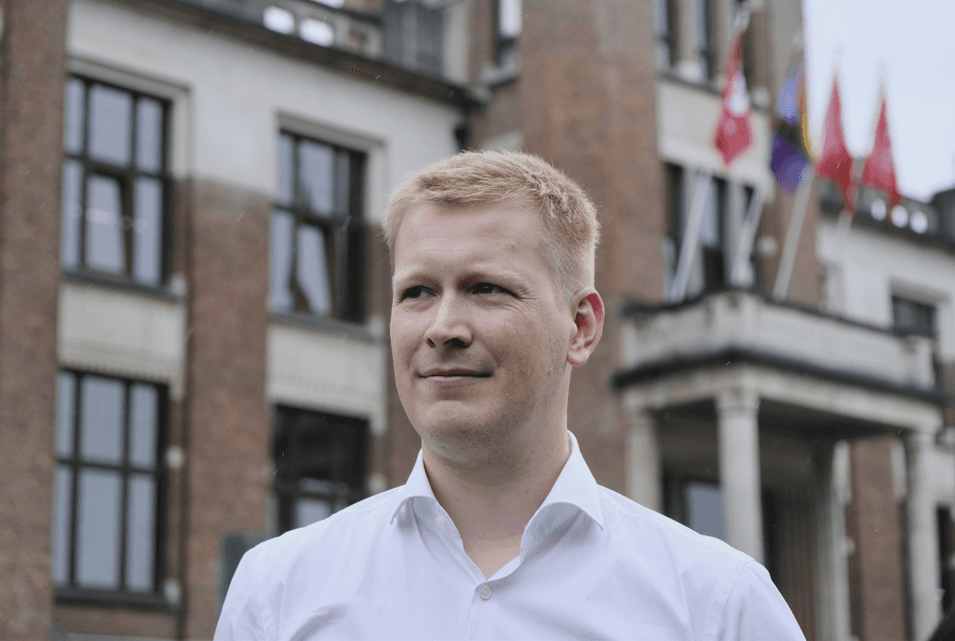
Sander Wuyts, CEO of ImmuneWatch Photo by:
Before we dive into your work, could you tell us a bit about the person behind the CEO of ImmuneWatch? How do you like to unwind outside of work?
Cycling, without a doubt. I’m even wearing a cycling T-shirt right now. When I was younger, I rode a race bike, but that really changed when I moved to Germany for my postdoc. The area around Heidelberg isn’t flat like Belgium, it has wine hills and forests. That’s where I discovered how beautiful cycling through nature can be.
That’s also where I bought my first gravel bike, and honestly, I haven’t been able to stop thinking about gravel bikes since. I often ride more than 30 kilometers to work. It’s the perfect way to unwind, just focusing on pedaling, getting into the zone, and clearing your head.
The highlight of my year is a bikepacking weekend I do with friends. We mount tents and all our gear on our bikes and go for three to four nights through Germany, the Netherlands, or other nearby regions, purely by bike. For me, that’s the ultimate way to relax and reconnect with nature.
Can you briefly walk us through your career path before becoming CEO of ImmuneWatch?
I studied bioscience engineering in Belgium, first at the University of Antwerp and then at KU Leuven. At that time, I was convinced I would never do a PhD. I chose engineering because I wanted to do something practical, and I thought a PhD would be too theoretical. But during my master’s thesis, I discovered I actually enjoyed research, and ended up doing a four-year PhD. It was a joint-PhD between the University of Antwerp and Vrije Universiteit Brussel.
After my PhD, I was again 100% sure I would go into industry. I had already done a lot of service work in genomics, sequencing and bioinformatic analysis with industry collaborations. There were enough opportunities for me to work as an NGS scientist or bioinformatician in industry. So, I started looking for jobs both in and outside of Belgium. I even had a few job offers in Belgium, Australia, and Copenhagen. Then suddenly someone from my network reached out via Twitter about a postdoc position in Peer Bork’s lab(*) at EMBL (European Molecular Biology Laboratory) in Heidelberg, Germany. It was the only academic position I seriously considered, and I decided to go for it.
Looking back, it’s funny: at two pivotal moments, I was convinced I would leave academia, but I still chose academic paths. But after about two years of postdoc at EMBL, I realized I wanted to work in a more fast-paced and dynamic environment. I needed my dopamine hits more frequently than one paper per year. That’s when I started looking at positions both in Germany and Belgium, I focused on start-ups as I wanted to leverage my diverse skill set and work in an entrepreneurial environment. During that time, I also attended the BioBusiness Winter School in January 2021.
I ended up co-founding a small B2C fermentation company called Kultured with my brother, where we sell kits that help people make their own kimchi and sauerkraut at home. That experience really opened my eyes—I realized I could do a lot more than just DNA analysis and writing papers. I enjoyed learning new skills and it really confirmed for me that I wanted to work in a start-up environment.
Through connecting with many people along the way, I co-founded ImmuneWatch in September 2021. They had been trying to spin out from university for a couple of years and were looking for someone to take the lead. After months of discussions, we decided to take the jump and I’ve been leading the company as CEO for over four years now.
You had opportunities in industry—why did you still choose to pursue a postdoc position?
I had one rule: I would only do an academic position if it was at a cool institute or in a cool location outside of Belgium. EMBL checked both boxes. Brisbane, Australia was also appealing, but the role offered there was more of a staff bioinformatician position, which didn’t feel right for me. I also knew EMBL from my research and visited multiple times, as part of student trips and conferences, and I was really impressed by the international atmosphere, community, and overall vibe of the institute. The lab itself was well known in the microbiome field. While applying for industry jobs, I also realized I could start working as a bioinformatician but mostly in junior positions. I felt that having two years of postdoc experience on my CV would allow me to enter industry at a higher level.
What advice would you give to PhDs who are debating between a postdoc and industry?
When looking for a new position, the first question I ask myself is: what can I learn from this? What new skills does this environment offer? For me, the change must be big enough to justify the transition. I could have stayed in Antwerp or Brussels for my postdoc, that would have been the easy option, but I felt the additional learning there would have been limited. And that’s not criticism of the research because the science there is great. What I’m talking about is the soft skills, like working in a different environment with other people, and learning how organizations function in new ways. I had already gone very deep into a specific scientific topic during my PhD and postdoc, and I felt ready to broaden my perspective rather than go even deeper in the science. That’s also what I really enjoy about my current role. I get to learn about sales, talk to investors, and manage finances, things I never would have touched in academia. That same mindset is what drove my decision to do a postdoc at an institute where I knew I could grow beyond just science.
Now focusing a bit on ImmuneWatch, how did you know the science and business case behind ImmuneWatch were strong enough to start a company?
The science was great without a doubt. I knew my scientific co-founders from my time at the University of Antwerp and was always impressed with the rigorous solutions they came up with. With my knowledge in bioinformatics and NGS-work I immediately also understood how such a solution would practically be applied. But regarding the business case: The honest answer? We were a bit naïve regarding time-to-market and that kind of helped us to take a leap of fate and get started. Fortunately, we also surrounded ourselves with advisors, professors who had transitioned to a start-up company and had successful exits. Finding experienced advisors who believe in you and that you can call and ask questions is invaluable.
What also helped is taking babysteps: Before ImmuneWatch, as mentioned, I started a small fermentation company with my brother, who has a financial background. That experience taught me the basics of running a business, writing a financial plan, and running a crowdfunding campaign. It was small-scale, but incredibly valuable to have hands-on experience. That “in-between step” gave me the confidence to jump from postdoc to CEO. Without it, the gap would have felt too big. I learned a lot in the first year and I am still learning a lot every day.
What are the most important things for people thinking about starting a company or becoming the CEO?
Networking is crucial to build trust. You need to find people who want to work with you and believe in you, even if you don’t yet have all the skills. Investors often know you’ll need time to learn, especially the financial or business side, what matters most is motivation and potential by showcasing how you tackled complex problems in the past. Going out and talking to a wide range of people really helps—not just those who do exactly what you do or work in closely related scientific fields, but also people from the business side. Those different perspectives can be incredibly valuable.
Secondly, don’t keep your idea locked in your head. Talk about it. If you’re too afraid to share, you’ll never get challenged or improve it. Feedback helps refine ideas and attract collaborators that might be intrigued by your idea. Of course, if there’s university IP involved, make sure that’s protected first. But after that, put the idea out there. I went through five ideas before landing on one worth pursuing, the company Kultured I co-founded with my brother. Talking to people helped me see which ideas made sense and which didn’t.
What are some of the key skills or mindset shifts needed when moving from academia to a startup or to be successful as an entrepreneur?
I think the main thing is eagerness to learn. During my PhD, I was constantly learning new skills, starting with setting up sequencing experiments and later bioinformatics. Over time I realized that this mindset shouldn’t stop at science. You don’t need to know everything but being eager to learn the basics of new unfamiliar areas is crucial in a start-up. I really value people who are willing to go beyond the job description, tackle problems no one has handled before, and figure things out along the way. For me, growth has always come from trying things I’ve never done before, learning from them, and gradually becoming more comfortable operating on a bigger scale. PhDs are well trained for this. You just need to apply that same mindset beyond science—to sales, business development, operations, and more. It’s about aligning with the company’s goal, being willing to grow with it and going out of your comfort zone.
Any final advice for people attending the BioBusiness Winter School?
First of all, attending the BioBusiness Winter School already shows you’re eager to learn. One important lesson I learned later is the value of saying no. During my PhD, I said yes to everything, which eventually took a toll on my health. Curiosity is great, but focus matters too. If you know where you want to go, learn to say no to opportunities that don’t move you toward that goal. Focus, protect your energy, and be intentional about your path.
(*) Between conducting and editing this interview, Sander's postdoc supervisor, Peer Bork, sadly passed away. Sander wishes to express his condolences to Peer's family, the EMBL community and anyone who has been affected by this sudden loss. Read more at: https://www.embl.org/news/people-perspectives/remembering-peer-bork-obituary/