Ecosystem
Zorg en bedrijven versterken health-innovatie in Noord-Nederland
3 min read
What are the underlying principles that defines a real collaborative success? One true success story is the growing partnership between Leiden in the Netherlands and Lund in Sweden. It is a cross-border alliance that is accelerating advances in cell and gene therapy, showing that combined efforts and merged ecosystems can provide foundation for breakthrough therapies.
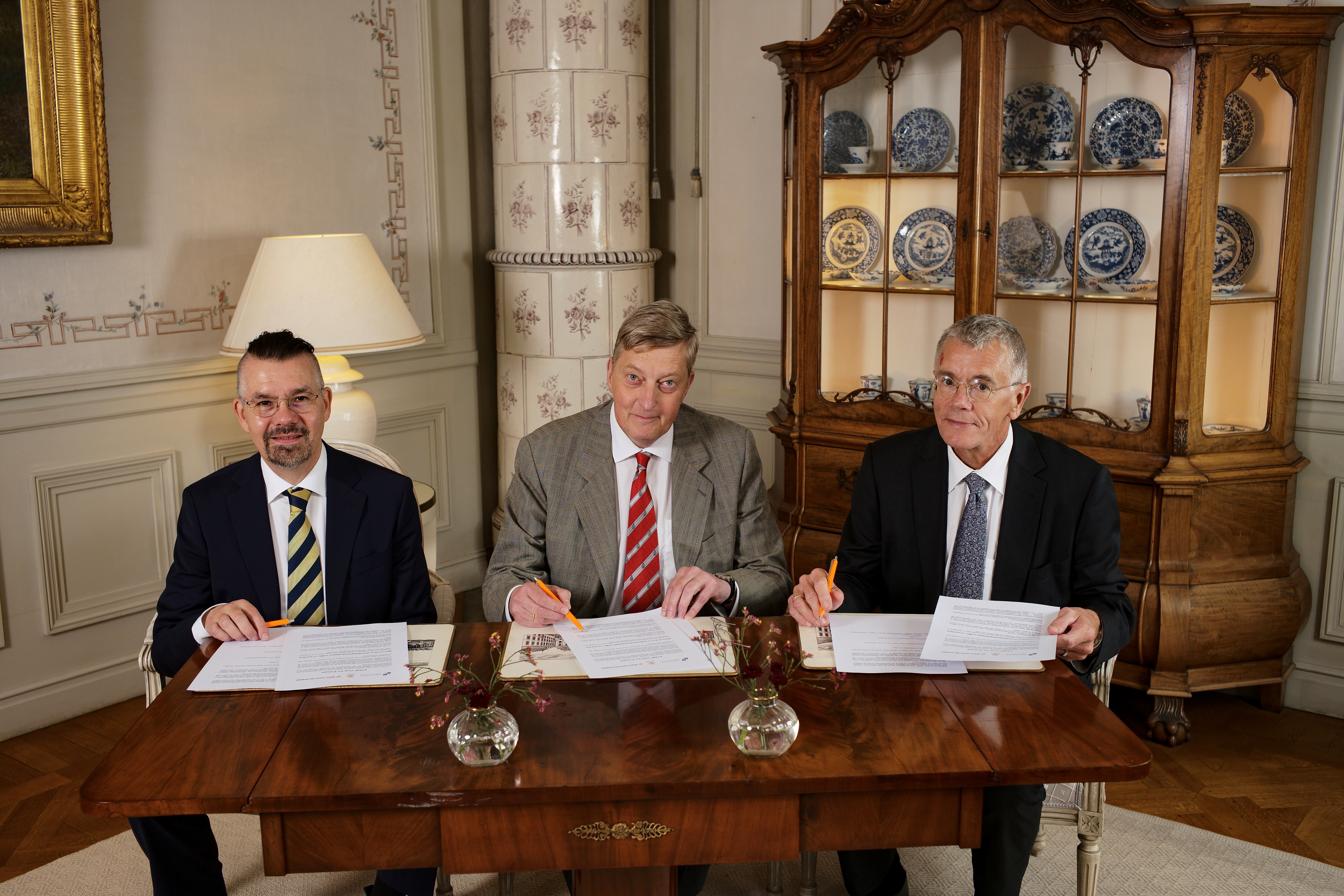
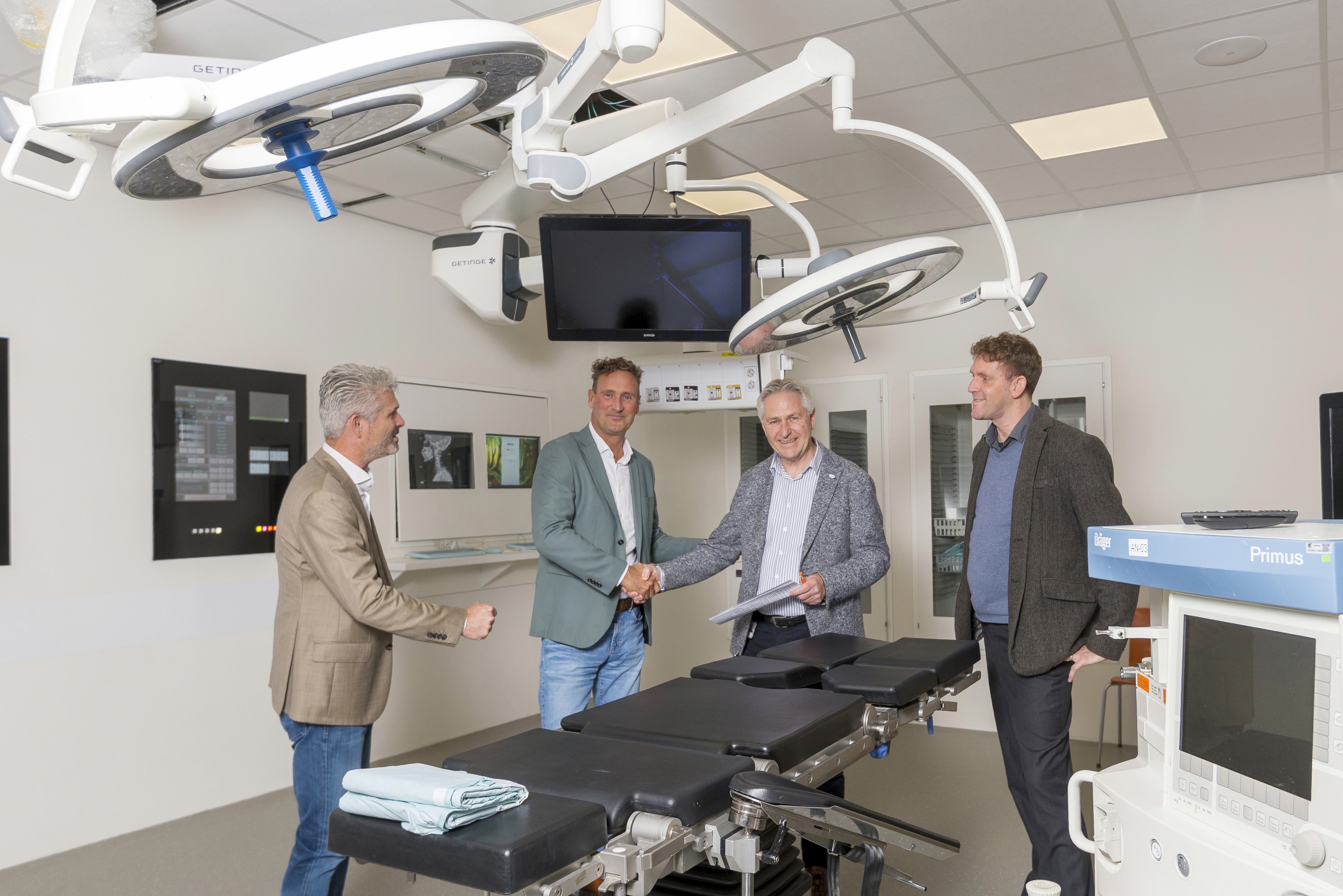
Erik Renström, vice chancellor Lund University, Pancras Hogendoorn former Dean LUMC and Björn Lövgren-Ekmehag, CEO Skåne University Hospital signing the MoU 2023. Photo by: Bengt van Loosdrecht
From royal visit to real value
The partnership in cell and gene therapy was officially launched in October 2022 during a state visit by the King and Queen of the Netherlands to Sweden. A memorandum of understanding (MoU) was personally signed by LUMC dean, Lund University vice chancellor, and Skåne University Hospital CEO, ensuring high-level commitment. The MoU was only possible thanks to world-class research environments on both sides, a strict deadline and aspiration for excellence.
Boosting talent and infrastructure
At the working level, the collaboration has been steered by Prof. Stefan Jovinge (Lund) and Prof. Niels Geijsen (Leiden). What began as a scientific project and an idea of a joint master’s program, rapidly expanded. Later in 2022, Lund was selected to join Sweden’s national doctoral program in advanced therapies. Now the Leiden–Lund collaboration is leading RAMP-UP, a Marie Skłodowska-Curie doctoral training network, funding 55 PhD students across Northern Europe. Most of the students will study in Leiden or Lund, ensuring access of top-tier talent in cell and gene therapy.
Meanwhile, LUMC had already in 2021 become one of three global sites for the Novo Nordisk Foundation’s prestigious reNEW stem cell medicine initiative. The following year, the Netherlands inaugurated NecstGen, a state-of-the-art facility for GMP manufacturing of cell and gene therapies. On the Swedish side, Lund complemented its first-in-human trial facility with a new Pre-GMP center, opened early in 2025. Together, these infrastructures in Leiden and Lund, form a complete pipeline from early research to clinical application.
An integration of ecosystems
What sets this collaboration apart is that it goes beyond single projects. The universities frequently exchange lecturers and internships, and infrastructures connect and collaborate across ecosystems. Dutch companies have become regular participants in Sweden’s conferences on Advanced Therapy Medicinal Product (ATMP), and Swedish biotech firms are exploring partnerships in the Netherlands.
One example is Utrecht-based Scinus Cell Expansion that recently teamed up with Lund Stem Cell Center in a project funded through Eurostars. Another example is AMARNA from Leiden and Sweden’s NorthX Biologics, that are combining efforts to support future clinical trials of next-generation gene therapy. Both Sweden and the Netherlands are small countries with world class research mutually benefiting from working together.
Regional to national level
Sweden has already built a strong platform called ATMP Sweden, which brings together hospitals, universities, and companies under one umbrella. The Netherlands is now developing a similar node, inspired by the Swedish model.
Looking forward, the partnership is set to scale. In early 2025, the Netherlands Embassy in Stockholm hosted a roundtable with key stakeholders from both countries, discussing production, training, and industry–academia collaboration. ATMP-production and development are complex endeavors and offer many opportunities. Combining the ecosystems will provide a critical mass to deliver complete therapies.
Internationalization of ATMP is crucial
Cell and gene therapies are among the most promising advances in modern medicine. Cell therapy involves restoring or modifying cells to fight disease, using the patient’s own cells or those from a donor. Gene therapy addresses inherited disorders at the DNA level, offering not just treatments but potential cures. Together with tissue-engineered products, they form a class of treatments known as ATMPs.
But while science is progressing fast, the path to clinical application is complex. Manufacturing capacity, training of skilled personnel, and sustainable healthcare financing are major hurdles. To tackle these challenges, international collaboration is crucial.
Leading Northern Europe
Successful international collaboration is possible when all parties see clear benefits. In the Leiden-Lund case, hospitals and universities shared a strong incentive to speed up the development and delivery of advanced therapies to patients.
Companies discover business opportunities in a larger ecosystem and for governments, cell and gene therapy offers a game-changing opportunity to treat more patients with fewer resources. By connecting the ecosystems of northern Europe, starting with Sweden and the Netherlands, collaboration can drive innovation and strengthen leadership in life science.
By Dr. Björn Ursing, the Embassy of the Kingdom of the Netherlands in Stockholm